Hiroshima, 60th Anniversary
It's been 60 years since the first nuclear weapon was used in "combat" and the debate still continues.
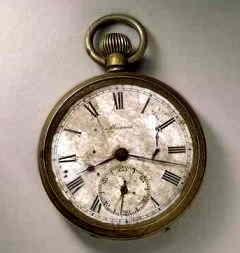 Let me just state my position on war right off the bat: I believe that war is never morally justifiable. I understand that we live in a fallen world and that there are people and countries that are lead by evil people with less than perfect motives. It's a dangerous world we live in, for sure, and it behooves every nation to be prepared to defend themselves or help defend others. But in the end, I do not believe any war is ever inevitable or unavoidable.
That said, the United States, Great Britain, Australia, China and a variety of allies were at war against the aggressor nation of Imperial Japan in August of 1945. Justifiable or not, we were engaged in a life and death struggle. The Allies were winning a slow and costly campaign that would have meant slogging it out in insane house-to-house fighting in the streets of Tokyo. But could the bombing of Hiroshima and Nagasaki be judged as morally or pragmatically necessary?
As stated before, war is never a moral option; the prosecution of war always involves choosing to behave like an animal, always causes more harm than good and always brings out the worst in people. To answer the question: it is my judgment that the use of atomic weapons on Japan was not morally necessary, but it may have been pragmatically necessary.
Conventional wisdom says that we needed to use the bomb in order to preserve lives, the lives of American soldiers who were to invade the islands of Japan and the defenders alike who certainly would have put up considerable resistance. The facts though do not support this assertion. Russia was transferring thousands of troops from the fight against Nazi Germany (which ended two months before the dropping of the bombs) to take on the Japanese. Japan could no longer effectively defend itself from the air or sea. Japanese officials knew the war was lost, and, it seems likely now, that they would have surrendered (atomic bomb or not) by the end of the summer of 1945.
Now, whether President Truman knew what the Japanese knew is another issue all together. Let's give Harry the benefit of the doubt and say that he actually felt the Japanese were going follow the Nazi example and fight to the death. He felt (obviously) justified in ignoring his advisors on the subject, because he believed there would be no surrender without a massive and costly invasion. Maybe he just wanted to test the bomb's effectiveness. Maybe he wanted to use it as a deterrent against Soviet aggression. Maybe he simply wanted to avoid another million casualties (by one contemporaneous estimate) and force the Japanese to surrender as quickly as possible. Unfortunately, not much is present in the historical record concerning the decision to drop the bombs, but we can make reasonable assumptions.
As a historian, I was trained not to make moral judgments about the subjects I study; historical figures and actions should be explained not judged. So, all of Truman's reasons strike me as extremely pragmatic and justifiable in it's historical context. To kill between 130,000 to 150,000 people (that's just Hiroshima and that's just within the first few days after the bombing) in exchange for the lives of an unknown number of American, Russian, Chinese, Australian, British and Japanese casualties or for mere political gain (stopping Stalin from turning northern Japan into another Poland for example) may have seemed reasonable. The bomb may have had enormous practical use (we may never know). Whatever "good" reasons Harry Truman had for doing so does not hide the monstrous immorality of the decision.
Hiroshima After Sixty Years: The Debate Continues
posted by Lee Ballard @ 8/06/2005
0 comments


