Friday, January 23, 2009

On Hate, Love and the Sinner

He who fights with monsters should be careful lest he thereby become a monster. And if thou gaze long into an abyss, the abyss will also gaze into thee. ~ Fredrich Nietzsche, Chapter IV: Apophthegms and Interludes, #146.

Brothers, if someone is caught in a sin, you who are spiritual should restore him gently. But watch yourself, or you also may be tempted. Galatians 6:1
Over the past three to six months, I’ve become increasingly aware of the controversy surrounding the use of Mahatma Gandhi’s now hackneyed line, 'Hate the sin, love the sinner.' While, like most slogans, it seems rather sound and has a certain popular authoritative quality to it, I also get the feeling that something fallacious lurks below said authority and popularity. Is it used to obfuscate the true intentions of the user? I’ve honestly never really had a problem with this saying, so it struck me as odd the way certain people were so quick to dismiss it. Then again, I’ve never really thought about it either.

My first refuge for answers on this is the Bible. I attempted to approach the question from a New Testament perspective (as we Christians seem to be the most likely to bandy this phrase) in an open-minded way. I wondered if 'Hate the sin, but love the sinner' is a true Christian attitude reflected in the words and actions of Jesus and the New Testament writers.

I won't dwell on the Old Testament, because there is clearly a different ethic going on. God, as depicted in the Hebrew Scriptures, seems to have a rather heavy hand; there are long lists of things that He hates (Proverbs 6:17-19) but there are a few passages that seem analogous to Gandhi’s phrase. For example, Amos 5:14-15 which reads:
Seek good, not evil, that you may live. Then the LORD God Almighty will be with you, just as you say He is. Hate evil, love good; maintain justice in the courts. Perhaps the LORD God Almighty will have mercy on the remnant of Joseph.
While this is not exactly what Gandhi had in mind, I think, someone who esteems the Bible could make a case from the Old Testament that God wants us to hate sin but be just (love, perhaps?) the transgressor (and maybe, just maybe He won't squash you like a bug). It also seems that the case can be made that Old Testament God hates the sinner as well. Nonetheless, there are things that God clearly hates.

But for a Christian, we must seek the example of Jesus. How does the character and actions of Jesus guide us? Did Jesus hate sin, but love the sinner? Would this be a motto He might have lived by in His dealings with others? I think these questions are answered depending on how you see Jesus: Is He your Friend, Rabbi or Judge? There are, of course, other ways of thinking about Jesus’ character—rebel, healer, savior, for example—but the three categories I have chosen seem to bear most closely on this issue.

For some people, Jesus is a groovy dude who, were he alive today, would have the world’s record for the number of Facebook friends. He laughed, told jokes and horsed around with everyone He encountered. This version of Jesus is often summed up in another slogan (which probably invites some examination itself): 'He accepts me just as I am'. Jesus got into quite a bit of trouble for hanging out with sinners (man oh man, are tax collectors evil or what?). Jesus was available to anyone who seemed to really want to know God, despite how messed up their thinking or their lives were. This Jesus is the Jesus of love, compassion, camaraderie and forgiveness. His main emphasis was friendship and nonjudgmentalism. For people who see Jesus in this way, judging others is the highest form of antichristian behavior. They are likely to passionately quote Matthew 7:1 ('Judge not, that ye be not judged.') and likely will have the entire chapter committed to memory (Matthew 7). Likewise, a person who prefers to see Jesus in this nonjudgmental light will cite the example of Jesus and the adulteress (John 8:1-11) which has an interesting tag in final verse).

For others, Jesus is seen as the completely just judge. He is quick to right wrongs and punish sin. He is seen as the Temple cleanser and guardian of righteousness. He demands that we be morally outstanding, to live our lives even more true than the most religious of the religious. He cast judgment on people, places and things, even whole towns), proclaiming 'Repent: for the kingdom of heaven is at hand' (Matt 4:17). For people who choose to see Jesus in this way, Mark’s (Mark 11: 15-17) account of Him cleansing the Temple of moneychangers shows that Jesus can become angry and, perhaps, hateful of sin.

Finally, Jesus is seen as a sort of ultra-wise Socratic mystic. He is their 'favorite philosopher'; He is Rabbi Yeshua. He was here to reveal the Truth and to be the Truth. His job was to enlighten. On moral issues, he was revolutionary, teaching a strict personal ethic combined with a nuanced philosophy of the ‘Kingdom of God’.

In my mind, this Jesus is more balanced (if still simplistic) and, therefore, probably the more helpful image in relation to this issue. Clearly, He teaches that we need repentance (Luke 5:32) but warns that we should not put burdens on others (Luke 11:46-47) that we ourselves cannot shoulder. He warns that we should love our enemies (Matt 5:43-48), but to take care to avoid rubbing shoulders with evil too much (Matt. 7:6).

When we say 'hate the sin, love the sinner', we need to be careful who we are judging here. The New Testament makes it clear that we should not judge those outside of the Church. I Cor. 5:12-13 asks: 'What business is it of mine to judge those outside the church? Are you not to judge those inside? God will judge those outside. 'Expel the wicked man from among you.'' We should cast out heretics (I’m using the word in a very technical sense) as 2 John 1:10 suggests; our primary focus as Christians is inward and upward therefore. We need to clean our own house before we judge the world (and we all know how much effort that takes). Jesus did not come to judge the world (that will be later), and, we Christians, being imitators of God, should do the same (2 cor 5:19-20, Eph 5:1-2). Love first (see I Cor 13), forgive (we are commanded to forgive and forgive and forgive, Matt 6:12, Matt 18:15-35), then finally turn the sinner from his ways (James 5:20).

When St. Paul says 'Hate what is evil; cling to what is good', I think it is clear that he is referring to a personal struggle.

Love must be sincere. Hate what is evil; cling to what is good. Be devoted to one another in brotherly love. Honor one another above yourselves. Never be lacking in zeal, but keep your spiritual fervor, serving the Lord. Be joyful in hope, patient in affliction, faithful in prayer. Share with God's people who are in need. Practice hospitality.

Bless those who persecute you; bless and do not curse. Rejoice with those who rejoice; mourn with those who mourn. Live in harmony with one another. Do not be proud, but be willing to associate with people of low position. Do not be conceited. (Romans 12:9-16)
Christianity is a relationship with God and a radically ethical lifestyle (see Matt 5:20 for example). Both of these aspects are difficult (don’t I know it!) but having a 'Christian' lifestyle is what provides evidence to the outside world that our relationship is true. Jesus saved us to be better people, to be better citizens, neighbors, and friends, not to harp on others’ sins and make their lives more miserable. First see to the sins in your own life, then we can talk about the moral failings in your neighbor’s life (Matthew 7:3).

That is certainly not to say that we ignore the evils around us. There are evils that people do that should not be ignored. Where evil exists, it should be despised and combated, for I think that is also a Christian duty. Tolerance, in this sense, should not be our standard. As St. Augustine said,
Any and every unrighteous man must be the object of our hatred in respect of his unrighteousness and the object of our love in respect of his humanity; that by reproving the fault in him which rightly earns our hatred, we may liberate that in him which rightly earns our love, that is to say the human nature itself, and set right every fault in it.
We are, indeed, required to work toward removing sin in others’ life and in the world in general (Jude 1:22-23), but that must be tempered with the fact that we are not God, whatever God we attempt to imitate.

Following a Jesus who is the Judge may give intolerant and militant Christians 'permission' to go on elaborate and hurtful crusades against a particular sin or sins. The monster I pursue with such passion may spawn other monsters in my soul.

While, seeing Jesus as merely a Friend also has it's dangers. Those who focus too much on these aspects of Jesus may find that they begin to become more open to moral lapses. The abyss will open up to them, beckoning them toward lukewarmness, making excuses for sin in others and in themselves.

While we may be better served with a slogan more along the lines of ‘hate the sin in me, love all sinners as brothers and sisters’, in the end, I do think the phrase ‘Hate the sin, love the sinner’ has a certain utility to it. But it cannot be used to justify our own personal crusades against ‘unrighteousness’. We cannot attack the sin outside before we attack it on the inside.

Labels: , , ,

Monday, January 28, 2008

The Pope on Science and Religion

Today, Pope Benedict warned that the "seductive" powers of science are once again denigrating humanity's spiritual nature, reigniting the old science vs religion debate. Calling for a more interdisciplinary approach, he said that,
the exact sciences, both natural and human, have made prodigious advances in their understanding of man and his universe. [But] there is a strong temptation to circumscribe human identity and enclose it with the limits of what is known. . . .

In order to avoid going down this path, it is important not to ignore anthropological, philosophical and theological research, which highlight and maintain the mystery of human beings, because no science can say who they are, where they come from and where they go. The knowledge of human beings is then, the most important of all forms of knowledge.

Human beings always stand beyond what can be scientifically seen or perceived. To overlook the question of man's 'being' inevitably leads to refusing the possibility of research into the objective truth of being [. . .] and, effectively, to an incapacity to recognize the foundation upon which human dignity rests, from the embryo until natural death.
Science cannot rest on its own, and, despite what "science" would have you believe, it is not value-free, nor should it be. All science (all knowledge itself, perhaps) is value-laden. Science for the sake of science, and progress for the sake of progress should be questioned, examined and harnessed, both in its limits and its potential.

"Man," says the Pope, "is not the fruit of chance or a bundle of convergences, determinisms or physical and chemical reactions." And I have to agree. There is more to a human being than nucleotides, neural transmitters or brain stem functions. In fact, we are much more than the sum total of our entire body and all of its magnificent functionality, including our ability to objectively reason.

Indeed, as the Pope alluded to, our humanity emerges from our biology, our reason and our ability to intuit the world of the spirit. In fact, I might say that our humanity rests of science AND faith. While science cannot even ask spiritual questions, it can foster or destroy human dignity.

Labels: , ,

Monday, January 21, 2008

Human Cloning: A Viable Reality

Stemagen Corp. of La Jolla, California announced last Thursday that it had successfully created cloned human embryos from donor DNA and eggs. Using somatic cell nuclear transfer (SCNT), a technique whereby the nucleus is removed from a donor cell and placed in a egg cell devoid of its nucleus to be reprogramed by the egg, the company produced five new human embryoic cells. The press release goes on to explain:

In the experiments, the researchers removed the nuclei of mature oocytes from healthy young women who had previously donated eggs for successful infertility treatments. The SCNT technique was then used to insert DNA from an adult male donor into the oocytes. The DNA was derived from a type of cell called fibroblasts, obtained from skin biopsies.

Subsequently, several of the reconstructed oocytes continued to develop as normal embryos, to the blastocyst stage. Extensive and carefully documented genetic tests were performed to confirm the genetic identity of the cloned embryos. In three embryos, tests showed the same DNA as the male fibroblast donor.

In one of the three cases, additional tests showed that the embryo had another type of DNA, called mitochondrial DNA, from both the female oocyte donor and the male DNA donor.

Mitochondrial DNA testing is viewed as an essential proof of successful human cloning -- particularly after previous fabricated reports from a South Korean research group. Amidst this background of controversy, the researchers took extraordinary steps to ensure that their experiments were properly conducted and documented. These included approval by an independent review board and confirmation of the genetic results by an independent laboratory, among other steps.

The primary hope is that this research can be used to combat infertility, Alzheimer's and Parkinson's disease, and spinal cord injury, among others.

According to its ethical principles, "Stemagen's mission is to maintain exemplary standards in human embryonic stem cell research in accordance with the highest ethical and research principles." While I applaud their efforts to alleviate suffering and do so in an ethical manner, consequences of this research for the future needs to be carefully monitored. Creating human life (and despite the fact that we are talking about nuclei, DNA and eggs, we are still talking about a fully potential human being) for the purpose of taking it apart to see how it ticks is questionable. Additionally, there's nothing in this report that tells me that these clones could not be allowed to grow from blastocyst to fetus, from "full term" baby to adulthood.

If so, what then?

Labels: ,

Wednesday, October 31, 2007

Preying on the Unethical Computer User

It seems that spammers have created yet another way to get unsuspecting people to do their dirty work. A new Windows "game", which shows a half-naked woman, temps people into undressing her more if they can correctly type in text shown in an accompanying image.

The trick of the "game" is that the text players are asked to decipher are security measures placed on various forums, email and account registration forms. The scrabbled text images are almost impossible for spamming spiders and robots to correctly input, thus, keeping spammers at bay. With the help of an unethical computer user, this technique works because "the average male e-mail user would want to see more".

Happy Halloween . . . I guess.

Labels: , ,

Monday, October 8, 2007

Halo 3, an Ethical Church Recruiting Tool?

As a long-time computer gamer and programmer, I have mixed feelings about the use of violent computer games as Christian recruiting tools. As reported in the New York Times (Thou Shalt Not Kill, Except in a Popular Video Game at Church), Halo 3 has just become such a tool.

I tend to disagree with Daniel R. Heimbach, a professor of Christian ethics at Southeastern Baptist Theological Seminary, when he says, “To justify whatever killing is involved by saying that it’s just pixels involved is an illusion." There is a qualitative (and, one might argue, quantative) difference between blowing up a pixelized, 3D alien and tossing a real life hand grenade into the lap of a real life person. The only illusion here is the illusion that opponents in a computer game appear to be "alive". They are, of course, not. There's no difference between "killing" a monster (or another "person" for that matter), in a computer game and knocking down mechanical ducks at a carnival.

That said, I certainly do not discount the power of video games to desensitize, dehumanize and disassociate our actions from any real consequences. I can personally attest to the insidious way in which a computer game can subtly change the ethical perspectives of a player. I have no doubt in my mind that violent computer games can contribute to unethical and criminal behavior.

On top of those general observations, to use something clearly designed for mature audiences (at least 17 years old) to draw kids to church seems mildly irresponsible. While it is important to be all things to all people in order to help them come to Christ, I don't believe this falls under that mandate. Hey, if people want to play Halo 3, be my guest. I hear it's a great game. Hosting a Halo party sounds like a great outreach. I just don't see how it really is appropriate for kids.

Labels: , , ,

Tuesday, January 17, 2006

Supreme Court Upholds Oregon Suicide Law

With the vote count at 6-3, the Supreme Court upheld Oregon's 1997 "Death with Dignity" law. The Bush administration began the challenge in 2001, claiming that the law allowed physicians to prescribe drugs without "legitimate medical purpose". For the majority, Justice Kennedy said the "authority claimed by the attorney general is both beyond his expertise and incongruous with the statutory purposes and design." While dissenting Justice Scalia noted that "If the term `legitimate medical purpose' has any meaning, it surely excludes the prescription of drugs to produce death."

Oregon's law requires that a person be at least 18 years old, a resident of Oregon, capable (defined as able to make and communicate health care decisions), and diagnosed with a terminal illness that will lead to death within six months. After a specific seven steps, a physician may prescribe a lethal dose of "medication". The doctor must report the prescription and the Department of Human Services must collect and publicly distribute data in accordance with legislation passed in 1999.

Briefly, I am disappointed in the Court's ruling. While, on the whole, I am glad for this debate--it has done some real good in terms of palliative care--the idea of medicating people to death does not strike me as the most ethical of positions. My stance is pretty simple: if medications happen to cause or speed up the death process in the act of helping or improving (life-giving) a patient's ability to cope with illness or injury, then the doctor has done his job as well as he or she can. This is particularly true in relation to pain medications. On the other hand, intentionally shortening life through the use of drugs leads to the belief that, in some situations, some lives are not worth living. Allowing death and hastening death are two very distinct positions. Medications, by definition, are used to help a person, a substance used in therapy; intending to kill someone is not therapy.

It appears that, once again, the people of Oregon will be required to deal with this issue as, perhaps, it should be.

Labels: ,

Wednesday, October 5, 2005

High Court Clashes Over Assisted Suicide

Seems we're at it again. Attorney General Gonzales has taken up where Ashcroft has left off, seeking to weaken the Oregon Death with Dignity Act at the Supreme Court. Arguing that doctors do not have the right to prescribe federally controlled substances for the purpose of causing death, Gonzales is not seeking to overturn the law, per se. Rather, he seeks to establish who has the right to regulate certain drugs.

Frankly, the legalities of this boggle my mind. On the one hand, I certainly agree with Gonzales on this: states shouldn't be allowed to change federal guidelines on drug use. On the other hand, it seems to me that the only ethical use of drugs is to make people more comfortable, reduce symptoms, and, if possible, eliminate or slow the progression of disease. It certainly will be interesting to see how our new Chief Justice handles this case.

Labels: ,

Friday, August 26, 2005

Ethical Alternatives to Embryonic Stem Cell Research

Biologists have made a major breakthrough in stem cell research. Apparently, they can "reprogram" normal, adult skin cells, fusing them with an "existing, laboratory-grown embryonic stem cell." While the new cells are not, technically speaking, stem cells, they do behave in most respects just as any other undifferentiated stem cell. In theory, this should eliminate the need to destroy existing embryos and avoiding certain ethical questions.

At this stage though, viable embryos are still required for further research. "Although the embryonic stem cells that we made contain the patient's genes, they also contain the embryonic stem cell genes that we started with," research team member Kevin Eggan said. "And for the time being that's going to interfere with the usefulness of this."

It's also going to interfere with the much anticipated ethical clean slate. National Geographic wonders: No More Need to Destroy Embryos? "Maybe" in the "future."

Labels: ,

Friday, August 12, 2005

Dobson likened embryonic stem cell research to Nazi experiments

On August 3rd, Dr. James Dobson of Focus on the Family was discussing the current debate over the use of embryonic stem cells. In one statement, he likened embryonic stem cell research to Nazi experiments, saying:
You know, the thing that means so much to me here on this issue [embryonic stem cell research] is that people talk about the potential for good that can come from destroying these little embryos and how we might be able to solve the problem of juvenile diabetes. There's no indication yet that they're gonna do that, but people say that, or spinal cord injuries or such things. But I have to ask this question: In World War II, the Nazis experimented on human beings in horrible ways in the concentration camps, and I imagine, if you wanted to take the time to read about it, there would have been some discoveries there that benefited mankind. You know, if you take a utilitarian approach, that if something results in good, then it is good. But that's obviously not true. We condemn what the Nazis did because there are some things that we always could do but we haven't done, because science always has to be guided by ethics and by morality. And you remove ethics and morality, and you get what happened in Nazi Germany. That's why to Senator [Senate Majority Leader Bill] Frist [R-TN] and the others who are saying, "Look what may be accomplished." Yeah, but there's another issue, there's a higher order of ethics here.
While I heartily agree that embryonic stem cell research represents a serious moral failure, Dobson's analogy breaks down. This may seem a small thing, but worth pointing out. The horrors of the Holocaust were only the final step, the "Die Endlösung"; embryonic stem cell research only represents one small step toward something worse. (Which, of course, is not to suggest that is not bad on it's own merits.)

The experiments done by Dr. Josef Mengelle, Friedrich Mennecke, etc., had very little to do with causing any "good". Almost none of these so-called experiments were designed in any real way to gain scientific knowledge beneficial to mankind as a whole. They were designed to see how best to kill someone and what the effects of particular death-dealing procedures would be. Secondly, embryonic stem cell research (and the procedures designed to gather the cells in the first place) are nothing like Auschwitz or even Hadamar where the goal was to kill as quickly as possible rather than do legitimate research.

Bear in mind, I am a firm believer in the slippery-slope theory; what happened in Germany in the 1920's, 30's and 40's happened because small, unsound "wedges" were inserted into otherwise sound moral reasoning. People in Weimar Germany allowed many small steps toward Auschwitz, without really examining the path they were on. True, they always felt that they were heading in the right direction, but never really understood. History is full of people who honestly believed they were doing good but, come to find out, their struggle only allowed for evil. This is where Dr. Dobson is correct; while the Nazis never committed moral outrages because they wanted to help mankind (well, if you follow their logic they did, but that's another story), they did commit horrors on a grand scale because of the smaller steps which lead up to Auschwitz. He is also correct, in my view, in stating that embryonic stem cell research represents a "wedge" in our culture. When we get to point where helpless humans, or, more accurately, humans that have a very small political voice of their own, can be sacrificed to potentially help other humans with a stronger political voice, we should always worry. I'll leave you with the words of another fine researcher, Harold Kaplan, from his book, Conscience and Memory: Meditations in a Museum of the Holocaust:
When people say "never again" as their chief lesson from the Holocaust, we are at a loss. What is to be never again? And then to treat the Holocaust as some indecipherable horror and mystery . . . is to put "never again" at a total impasse. Those who say "never again" speak of the final result, the "solution." That comes too late for such a vow. The question is, Where, at what point in the Nazi series of crimes, does the "never again" begin to apply?

The first sin was not the gas chambers, of course. . . . We understand that all human rights are connected that a Holocaust is only the last stage of their loss. (pp. 9-10)

Labels: , ,

Saturday, August 6, 2005

Hiroshima, 60th Anniversary

It's been 60 years since the first nuclear weapon was used in "combat" and the debate still continues.

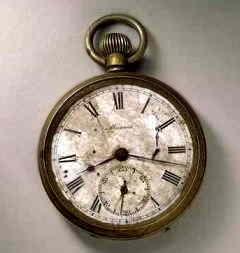
A watch from Hiroshima that was stopped by the detonation of the bomb.Let me just state my position on war right off the bat: I believe that war is never morally justifiable. I understand that we live in a fallen world and that there are people and countries that are lead by evil people with less than perfect motives. It's a dangerous world we live in, for sure, and it behooves every nation to be prepared to defend themselves or help defend others. But in the end, I do not believe any war is ever inevitable or unavoidable.

That said, the United States, Great Britain, Australia, China and a variety of allies were at war against the aggressor nation of Imperial Japan in August of 1945. Justifiable or not, we were engaged in a life and death struggle. The Allies were winning a slow and costly campaign that would have meant slogging it out in insane house-to-house fighting in the streets of Tokyo. But could the bombing of Hiroshima and Nagasaki be judged as morally or pragmatically necessary?

As stated before, war is never a moral option; the prosecution of war always involves choosing to behave like an animal, always causes more harm than good and always brings out the worst in people. To answer the question: it is my judgment that the use of atomic weapons on Japan was not morally necessary, but it may have been pragmatically necessary.

Conventional wisdom says that we needed to use the bomb in order to preserve lives, the lives of American soldiers who were to invade the islands of Japan and the defenders alike who certainly would have put up considerable resistance. The facts though do not support this assertion. Russia was transferring thousands of troops from the fight against Nazi Germany (which ended two months before the dropping of the bombs) to take on the Japanese. Japan could no longer effectively defend itself from the air or sea. Japanese officials knew the war was lost, and, it seems likely now, that they would have surrendered (atomic bomb or not) by the end of the summer of 1945.

Now, whether President Truman knew what the Japanese knew is another issue all together. Let's give Harry the benefit of the doubt and say that he actually felt the Japanese were going follow the Nazi example and fight to the death. He felt (obviously) justified in ignoring his advisors on the subject, because he believed there would be no surrender without a massive and costly invasion. Maybe he just wanted to test the bomb's effectiveness. Maybe he wanted to use it as a deterrent against Soviet aggression. Maybe he simply wanted to avoid another million casualties (by one contemporaneous estimate) and force the Japanese to surrender as quickly as possible. Unfortunately, not much is present in the historical record concerning the decision to drop the bombs, but we can make reasonable assumptions.

As a historian, I was trained not to make moral judgments about the subjects I study; historical figures and actions should be explained not judged. So, all of Truman's reasons strike me as extremely pragmatic and justifiable in it's historical context. To kill between 130,000 to 150,000 people (that's just Hiroshima and that's just within the first few days after the bombing) in exchange for the lives of an unknown number of American, Russian, Chinese, Australian, British and Japanese casualties or for mere political gain (stopping Stalin from turning northern Japan into another Poland for example) may have seemed reasonable. The bomb may have had enormous practical use (we may never know). Whatever "good" reasons Harry Truman had for doing so does not hide the monstrous immorality of the decision.

Hiroshima After Sixty Years: The Debate Continues

Labels: , ,